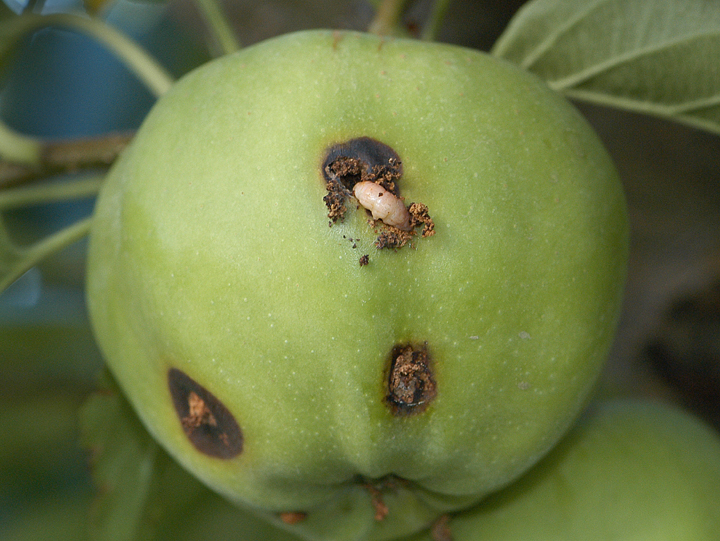
The apple maggot (Rhagoletis pomonella) is a major pest for apple lovers. Unlike codling moths that primarily target the core, these flies produce larvae that tunnel through the fruit's flesh, leaving irregular brown trails or streaks. This internal damage often makes the fruit unpalatable and causes it to drop prematurely.
.jpg?width=421&height=451&name=OPM_applemaggot02-Apple%20maggot%20larvae%20(credit%20R%20Kriner%20Rutgers).jpg)
Apple maggot larvae and associated damage to apple fruit (photo credit: R. Kriner Rutgers).
Identify the Intruder
The adult apple maggot is a small fly, slightly smaller than a housefly. It is easily distinguished from other orchard insects by its black body and the prominent white bands across its abdomen. Its clear wings feature a very specific dark banding pattern. The eyes of the adult fly are a dull red color.
As seen in the image (below), the apple maggot adult at the center of the card is approximately 2/3 the size of a common housefly (top left) and many times the size of the common fruit fly (center right). Confirmation of the wing patterns on your traps is the first step in successful management.
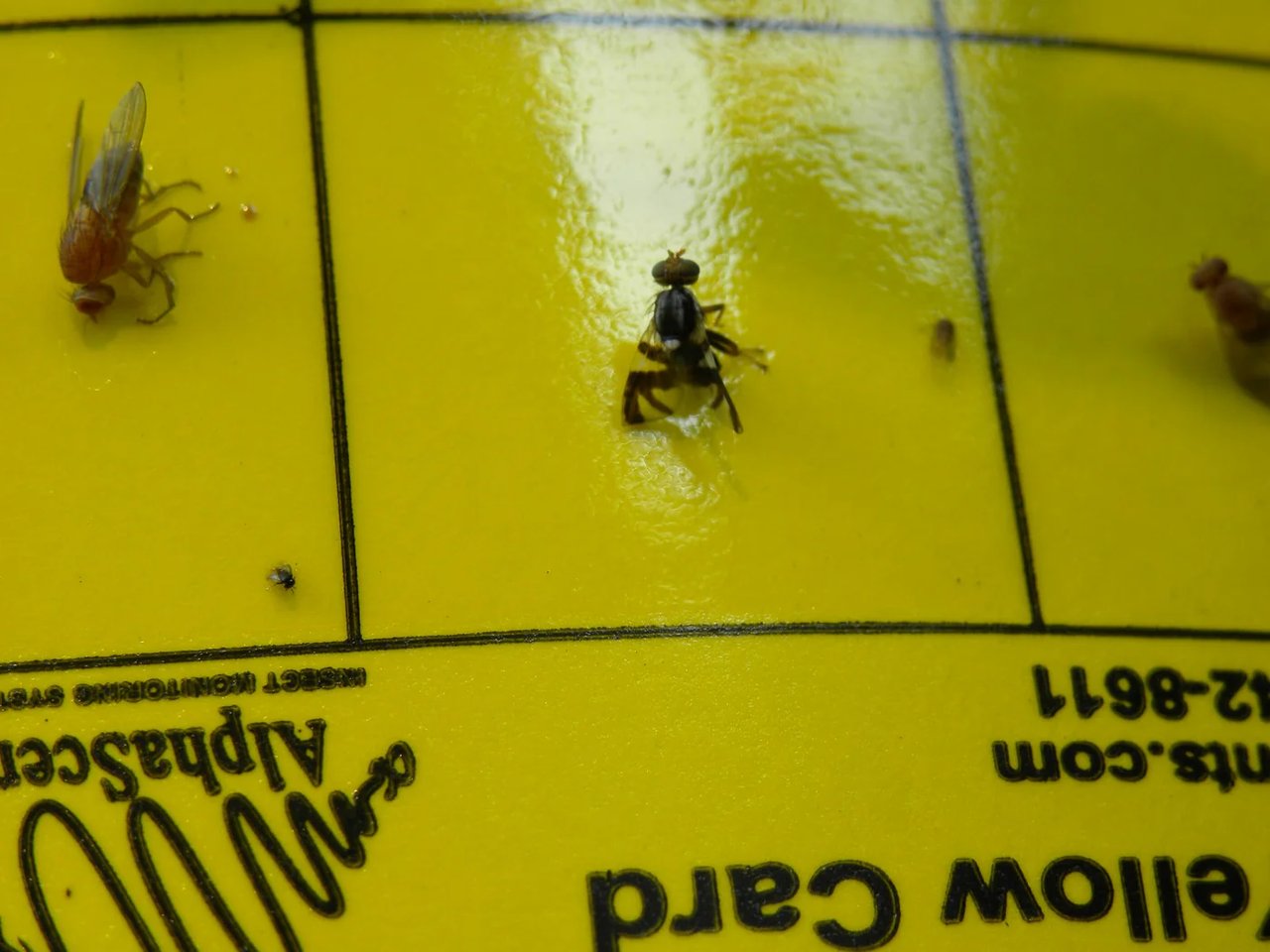
Apple maggot is shown (centre) on a yellow monitoring card. Note it's size relative to the box markings and print size yellow card, the common housefly (top left) and the fruit fly (centre right).
Strategic Trap Deployment
In Vancouver, BC adult flies begin to emerge from the soil in late-May and early-June and remain active through the summer until autumn. Because these flies are attracted to visual cues and scents rather than just pheromones, the setup is specific:
-
Timing: Hang your traps in the tree by late-May to catch the first emerging adults.
-
Types: Use large yellow sticky rectangles baited with pheremone lures to monitor pest levels. Once you verify your catch, you can opt book spray treatments and/or install red sticky sphere traps that mimic ripe fruit to attract and capture both male and female adults.
-
Placement: Hang traps on the south side of the tree approximately 6 feet (2m) off the ground.
-
Visibility: Place them in the outer third of the canopy where they are free of small branches or leaves so they are visible to flying adults.
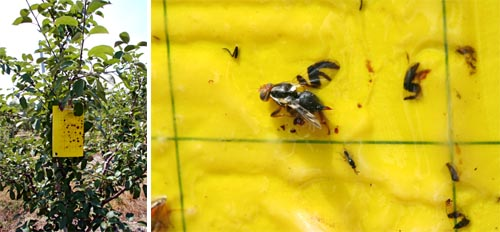
(Left) Apple maggot yellow monitoring card hung on the outer portion of the apple canopy. (Right) Apple maggot fly caught on the yellow monitoring card. Note the distintive wing pattern and size relative to the standardized grid markings on the yellow card.
Active Monitoring and Maintenance
Checking your traps frequently is essential for timely intervention.
- Frequency: Inspect your yellow monitoring cards and red-ball at least 1-3x times weekly during the growing season.
- Scout for Stings: Look for small punctures or "stings" on the fruit skin and slightly raised areas where eggs have been deposited (see below). This lets you know that egg laying is active and, if prevalant, action is needed.
- Red ball-trap upkeep: Scrape off dead insects and debris or wash and recoat the balls to ensure the sticky surface remains effective.
- Replacement: If required, replace the traps every 3 to 4 weeks to maintain maximum stickiness.
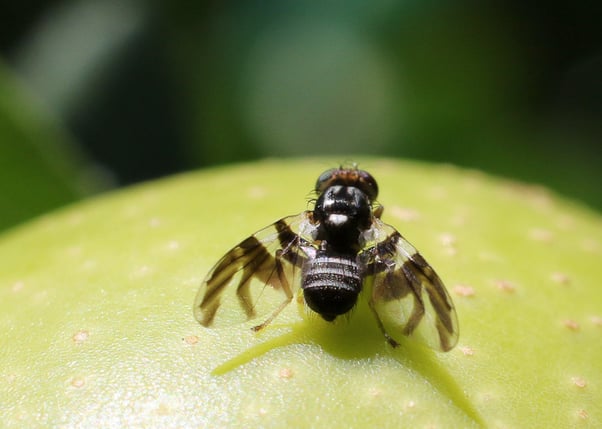
Apple maggot adult fly (Rhagoletis pomonella) on the surface of an unripe apple. You can see many egg-laying sites (sites of oviposition). Egg sites can be distinuished as they are slightly raised and white to light-peach colour.
Need cards, ball trap kits, installation, or monitoring support? Get in touch today!
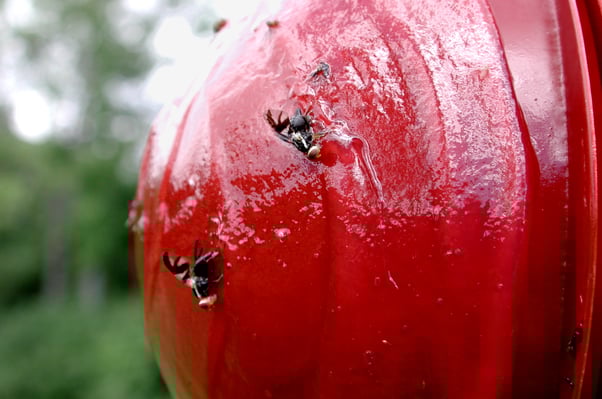
Apple maggot red ball trap with adult fly catch.
Red ball-traps can be used both to lure and catch Rhagoletis pomonella adults.
Tactical Response: What to do when you catch one
Once you detect an adult fly, you have a window of about 7 to 10 days before they begin mating and depositing eggs under the fruit's skin.
- Orchard Sanitation: This is the most effective cultural control. Pick up and destroy all fallen apples at weekly intervals starting in early August. This prevents larvae from leaving the fruit to burrow into the soil to pupate.
- Physical Barriers: In home orchards, you can protect individual fruits by bagging them in paper, poly mesh or plastic baggies by mid-June.
- Chemical options: If populations remain high despite physical and cultural control, you will need to consider spraying if you want to defeat this stubborn pest.
- Professional approach: We often recommend a combo of Kaolin Clay combined with a short acting insecticide or similar environmentally preferrable option. Our sprays are calibrated to pest levels, timed and rotated-out to ensure that multiple modes-of-action minimize pressures while also preventing resistence.
- Homeowner options: Non-commercial versions of pesticides may be available at garden centres*. Some DIY sprays can be created and may be effective, provided you apply every 1-2 weeks during the growing season. Unfortunately, most of the evidence is annecdotal and we haven't been able to validate any particular homemade recipe.
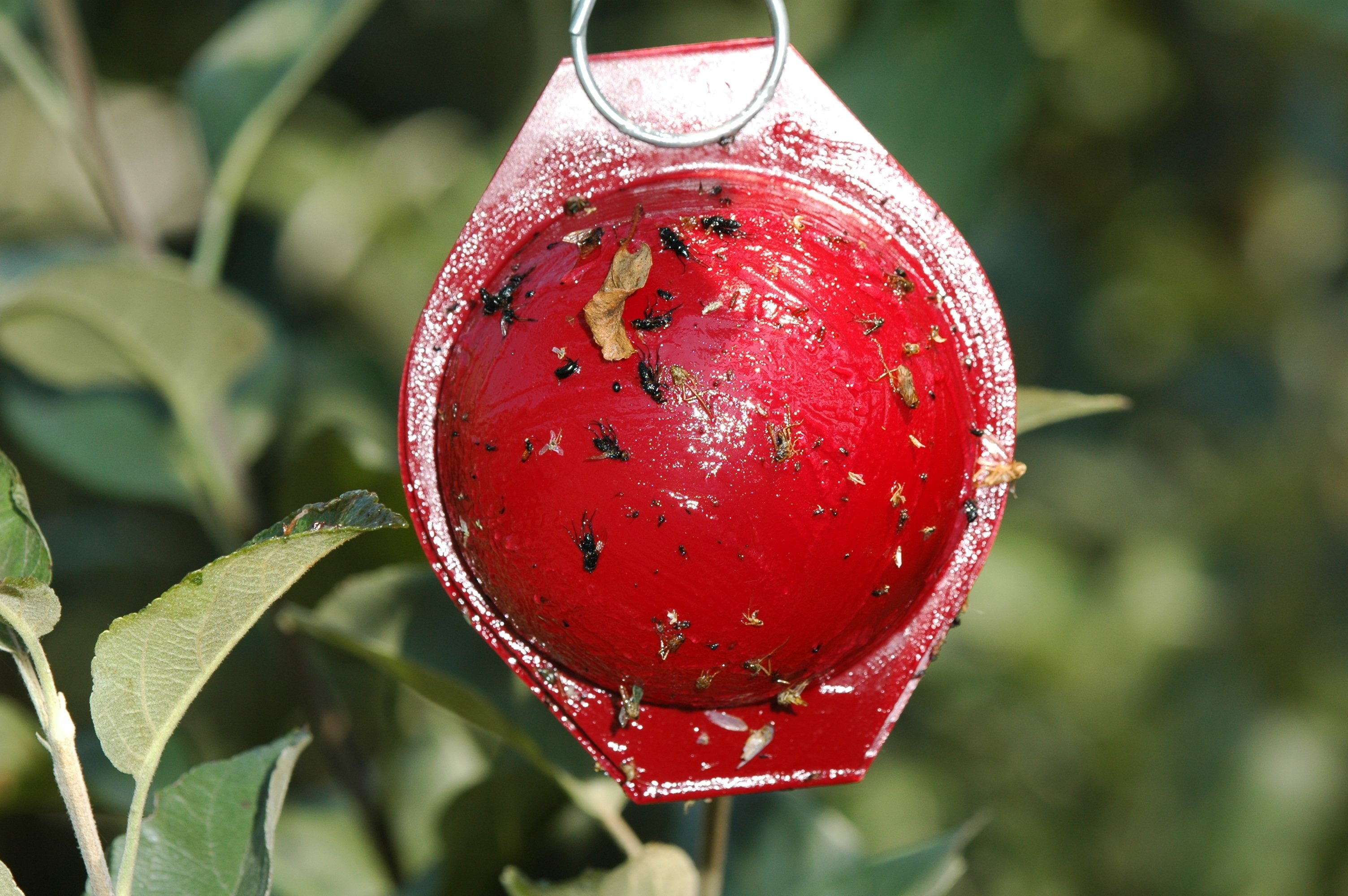
Another zoomed-out view of an apple maggot "red ball trap" with adult fly catch, among others.
Red ball-traps can be used both to lure and catch Rhagoletis pomonella adults.
*CAUTION: Mention of a pesticide or use of a pesticide label is for educational purposes only. Remember, the label is the law. Even sprays available for homeowner use are subject to the label directions on the container. Make sure the species of pest and plant are explicitly listed on the label of the product you intend to use. And observe the number of days between pesticide application and when you can harvest your crop.
.jpg)